
For the Victorian poultry industry, the middle of 2026 marks a significant legislative shift. The transition from the voluntary animal welfare code of practice to the mandatory welfare standards under the Prevention of Cruelty to Animals (POCTA) framework is now in effect.
These changes are not just suggestions for better bird health; they are legal requirements. For producers, this means that infrastructure, daily routines and record keeping in poultry must now meet a strictly enforced national benchmark to avoid significant penalties.
As these regulations come into force, farm managers are searching for the best poultry training to ensure their teams are compliant and competent.
The best poultry training for 2026 is training that moves beyond theory and into the practicalities of the shed. Compliance now requires more than a general understanding of animal handling guidelines. It requires a team that can accurately monitor ammonia levels, manage light requirements and maintain the precise records needed when an auditor asks what the stocking density for your specific shed type.
To meet these mandatory welfare standards, producers are increasingly looking for courses specifically tailored to the Australian regulatory environment and the updated POCTA requirements.
Key Changes: Lighting, Space and Environmental Monitoring
The new regulations focus on core areas that directly impact daily operations and your animal welfare code of practice alignment:
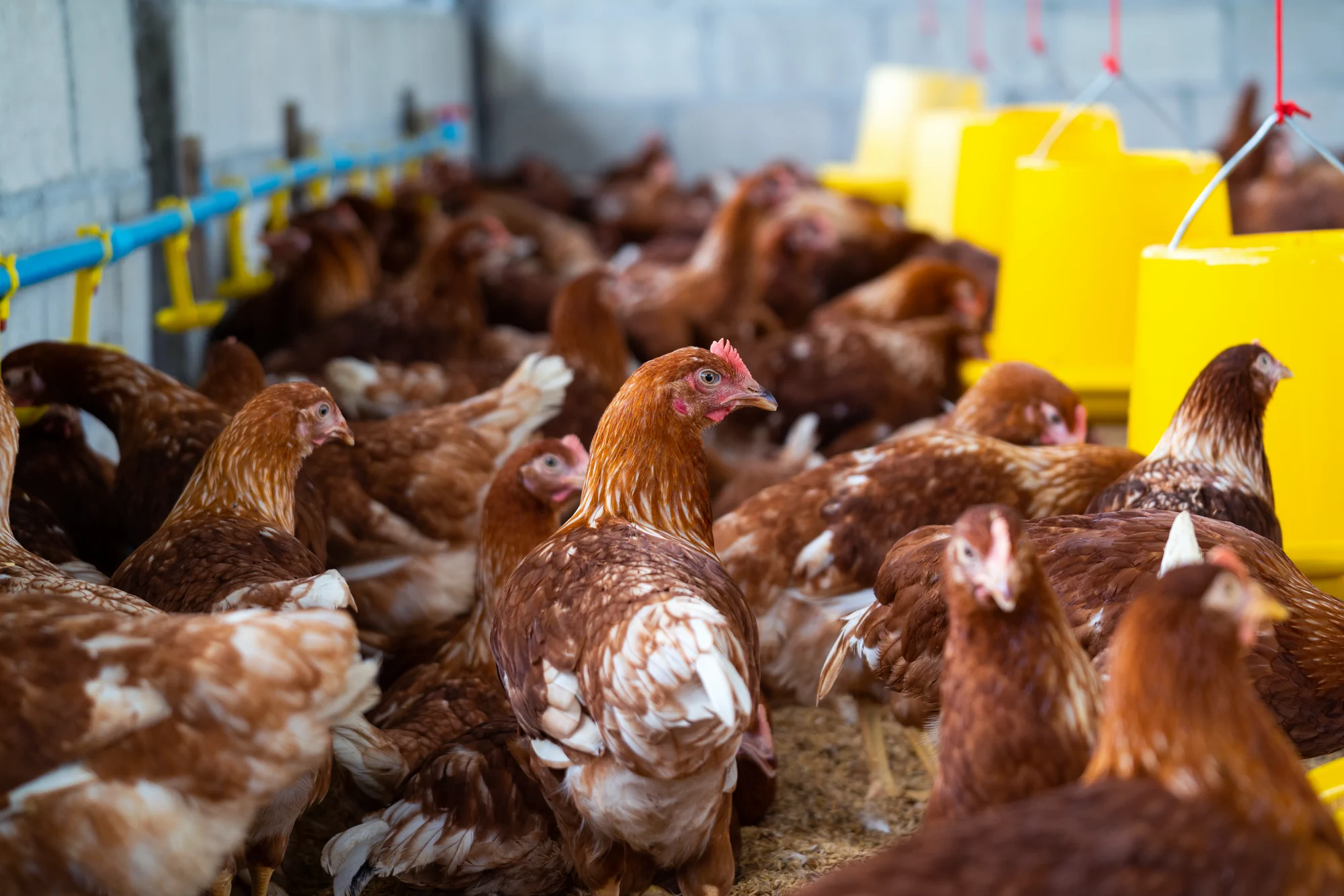
- Light requirements: Meat chickens over one week old must now have a minimum of 4 hours of continuous darkness, with 6 hours of total darkness every 24 hours. Light intensity must be maintained at a minimum of 10 lux at bird level during light periods, increasing to 20 lux for the first three days of a chick’s life.
- Stocking density in poultry: For birds over 10 days old, space allowances are now strictly regulated based on your ventilation systems. In mechanically ventilated sheds, the maximum density is capped at 38 kg/m2 in winter and 36 kg/m2 in summer.
- Environmental Triggers: Producers must now take immediate corrective action if ammonia levels exceed 15 ppm at bird level, or if relative humidity stays above 70% alongside high temperatures for three consecutive days.
The Importance of Record Keeping in Poultry and Compliance
Under the new Victorian law, if it is not recorded, it did not happen. Record keeping in poultry is no longer an administrative afterthought; it’s your primary defence during an audit.
All producers are now required to keep detailed records of daily monitoring, including mortality rates, environmental conditions and any corrective actions taken. Whether you use digital systems or printable poultry record-keeping templates, these records must be kept for a minimum of two years. Failure to produce these during an inspection can lead to non-conformance reports and legal repercussions under the updated welfare standards.
How to Avoid Penalties and Future-Proof Your Operation
The shift to mandatory welfare standards is designed to provide certainty to the industry and global markets. However, for the individual producer, it represents an operational hurdle that requires a trained and confident workforce familiar with modern animal handling guidelines.
Finding the best poultry training is the most effective way to avoid penalties. Ensure your staff have completed nationally recognised training that reflects the 2026 standards. A team that understands the why behind the move away from the old animal welfare code of practice is far more likely to maintain a quiet, efficient and compliant site.
Do these standards apply to backyard poultry owners?
What happens if my shed ventilation fails?
Is animal welfare handling training mandatory for all staff?
Secure Your Site’s Compliance
The mid-2026 deadline is upon us. Make sure your team has the skills to meet the new standards and protect your business from the risk of non-conformance. Explore our specialised animal welfare handling for poultry processing course at the new home of AUS-QUAL.